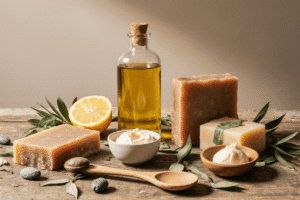
The shift toward natural skincare is growing for good reason. Some conventional skincare products contain ingredients that may irritate sensitive skin or disrupt the skin barrier in certain individuals. Many people are becoming interested in natural ingredients for skincare because they may help reduce irritation and support the skin barrier with simpler ingredients. This article explores several popular options, including olive oil, coconut oil, and apple cider vinegar.
Why Choose Natural Skincare?
The Hidden Dangers of Synthetic Skincare
Some skincare products contain strong active ingredients, fragrances, or preservatives that may irritate sensitive skin when overused. In certain cases, this may lead to dryness, redness, or discomfort. Some heavier formulations may also contribute to clogged pores in acne-prone skin.
In my experience, simplifying a skincare routine and reducing the use of heavily fragranced products helped reduce irritation and dryness over time.
Olive Oil: A Natural Moisturizer
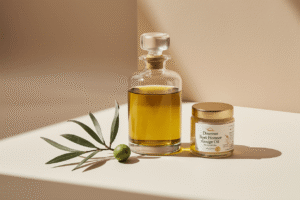
Olive oil has been used for centuries to hydrate and protect the skin. It contains vitamins E and K. These nutrients help keep skin soft and healthy. The oil is also rich in antioxidants called polyphenols. They guard the skin from environmental damage. A clinical study compared extra virgin olive oil with petrolatum. Results showed that olive oil supports the skin barrier and surface texture in healthy adults. Another study shows olive oil’s polyphenols have anti-inflammatory and antioxidative properties in skin tissue.
In my experience, olive oil worked well as an occasional moisturizer for dry skin. With regular use, the skin around my eyes felt softer and less dry.
That said: not all studies are entirely positive. One older study showed that topical olive oil reduced the integrity of the stratum corneum in some volunteers, and induced mild erythema — so it may not suit everyone. My rule: I patch-tested the oil behind my ear for three nights first, to confirm no irritation.
Coconut Oil: A Multi-Purpose Skincare Hero
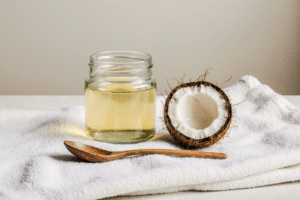
Coconut oil is one of the most commonly used natural skincare ingredients. It contains lauric acid, which has antimicrobial properties and may fight acne-causing bacteria. Research also indicates that virgin coconut oil (VCO) improves skin barrier function, reduces inflammation, and has anti-fungal and wound-healing properties.
Virgin coconut oil can be especially helpful for dry areas during colder months. In my experience, it helped soften rough patches and worked well as a gentle makeup remover.
Apple Cider Vinegar: A Natural Skin Balancer
At first glance, using apple cider vinegar (ACV) on the skin may seem unusual. However, diluted ACV may help support the skin’s natural pH balance. It also contains mild acids that can gently exfoliate dead skin cells. Some people use diluted ACV as a toner for oily skin. Users often report that it helps reduce excess oil and leaves the skin feeling fresher after cleansing. Because ACV is acidic, it should always be diluted and used carefully.

Important caution: Because ACV is acidic, it must always be diluted before application and patch-tested. A clinical pilot study published in Pediatric Dermatology (University of Virginia, 2019) examined the effects of diluted apple cider vinegar soaks in patients with atopic dermatitis. The researchers found no improvement in skin barrier function. Many participants also reported mild irritation or burning sensations.
Natural vs. Synthetic Skincare: A Balanced View
When choosing skincare, it is important to focus on long-term skin health. Some conventional products may irritate sensitive skin when overused. Natural skincare products often support hydration and help maintain the skin barrier with plant-based oils, antioxidants, and botanical extracts.
Simplifying a skincare routine may help reduce irritation caused by overly harsh products.
That said, natural does not always mean risk-free. For example, while olive oil may help moisturize dry skin, some studies suggest it can affect the skin barrier in certain individuals. Coconut oil may also clog pores in acne-prone skin. Because of this, skincare routines should always be adapted to individual skin needs.
Transitioning to Natural Skincare
Switching your routine to focus on natural ingredients for skincare requires patience. Your skin may need time to adjust to a new skincare routine. Some people experience temporary dryness, mild irritation, or small break-outs during this period. In my experience, these effects improved after a few weeks.
Here are some guidelines to smooth the transition:
- Introduce one change at a time (e.g., replace cleanser first, then moisturizer) to monitor how your skin reacts.
- Keep hydration steady — drink water, use a humidifier if needed, even when using “lighter” natural products.
- Patch-test any new oil or toner for 3 nights behind your ear or inner arm.
- Record your skin’s condition in a journal or photo log so you can track improvements.
- Be gentle: no strong exfoliants or acids while the barrier is repairing.
Simple Ways to Start Using Natural Skincare
Here are a few simple steps to introduce natural skincare into your routine:
- Use natural oils like olive or coconut oil instead of synthetic heavy-cream moisturizers.
- Try diluted apple cider vinegar as a toner (e.g., 1:4 ratio with water) to balance pH and reduce break-outs.
- Make DIY face masks with honey, avocado, oats or yogurt for added nourishment.
- Replace harsh cleansers with gentle options like raw honey or aloe vera gel.
- Swap synthetic serums with botanical alternatives (e.g., green tea extract, calendula).
Small changes in a skincare routine may help improve comfort and reduce irritation over time.
How Natural Skincare Helps the Environment
Beyond personal benefits, natural skincare also tends to be more eco-friendly. Many synthetic products come in non-recyclable packaging and contain chemical by-products that pollute water sources. Natural ingredients often break down more easily, and brands that use them tend to offer sustainable, recyclable packaging. By choosing natural skincare you are making a small but meaningful step toward a healthier planet.
Nature’s Gift to Your Skin
Research also supports the benefits of natural skincare. For example, a study on EVOO shows that its phenolic compounds contribute to wound healing and fibroblast action in skin tissue. Another review found that virgin coconut oil is beneficial for dermatological disorders, with anti-bacterial, anti-inflammatory, wound-healing, and barrier-repair properties. Even though research on ACV is more cautious and sometimes mixed, the concept of skin acidification and exfoliation remains an area of interest in skincare research.
Natural ingredients for skincare may help people who prefer simpler routines. Olive oil, coconut oil, and apple cider vinegar are widely used in skincare. These ingredients may support healthy-looking skin when used carefully.
A balanced skincare routine and careful ingredient selection are important. Patch-testing may help reduce the risk of irritation. Different skin types respond differently to skincare products. Consistency and moderation often matter more than following trends.
Common Skincare Myths Perpetuated by the Beauty Industry

I’m Victoria, the creator behind Eva My Balance. Passionate about beauty, wellness, sustainable living, and mindful self-care. My mission is to inspire you to live consciously and beautifully—inside and out.