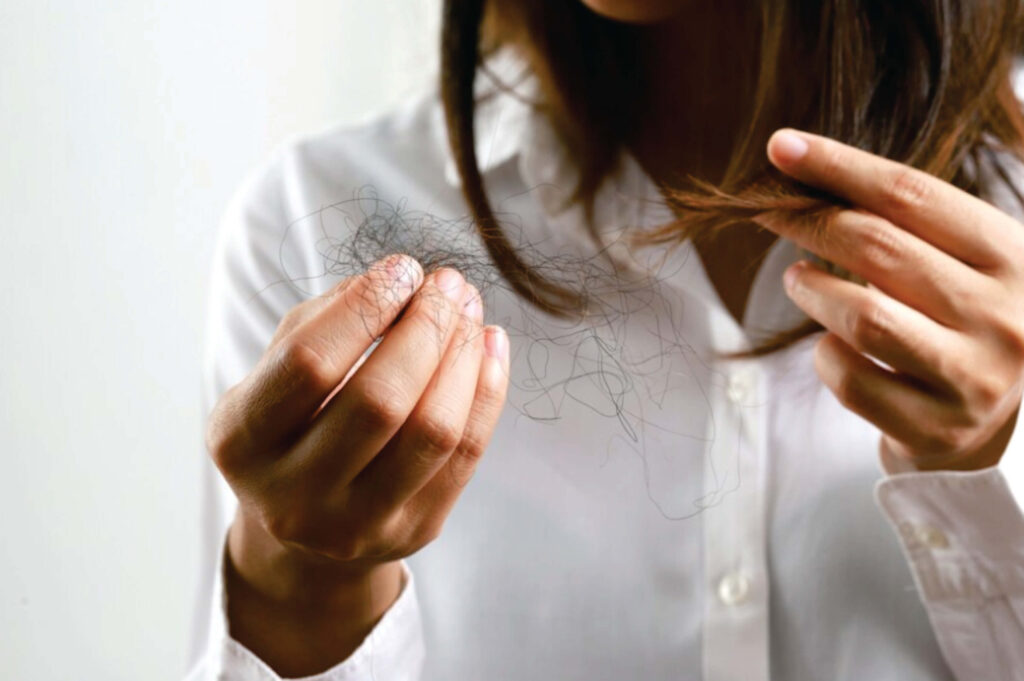
Everyday stress affects overall health, including hair condition. Prolonged psychological or physical stress weakens hair follicles, disrupts the scalp environment, and interferes with the natural hair growth cycle. Over time, this process often leads to stress-related hair loss, increased shedding, slower regrowth, and visible thinning.
Scientific evidence confirms the direct biological link between chronic stress and hair growth suppression. A study published in Nature demonstrated that prolonged exposure to stress hormones (such as cortisol and its biological equivalents) keeps hair follicle stem cells in a resting state, preventing normal regeneration and contributing to stress-related hair loss.
Understanding how stress influences hair health allows for earlier intervention, better scalp care, and more sustainable long-term solutions.
How Stress Affects Hair Growth
1. The Link Between Stress and Hair Follicles
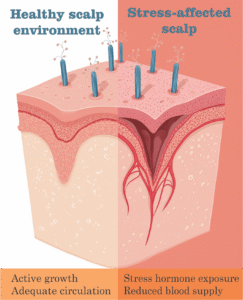
When stress levels rise, the body releases cortisol and other stress hormones as part of its natural survival response. While helpful in short bursts, prolonged cortisol elevation negatively affects hair follicles.
High cortisol levels:
- Suppress follicle cell division
- Shorten the anagen (growth) phase
- Push follicles prematurely into the telogen (resting) phase
Over time, fewer hairs remain in active growth, while more enter the shedding phase simultaneously. This mechanism explains why stress-related hair loss often appears suddenly and diffusely rather than in isolated patches.
A clinical review in The Journal of the American Academy of Dermatology confirmed that psychological stress is implicated in a range of hair loss disorders, showing that chronic stress contributes to increased diffuse thinning and delayed hair regrowth through neuroendocrine and immunological pathways. (Bai et al., The role of psychological stress in hair loss: A review, JAAD Reviews)
2. Types of Stress-Induced Hair Loss 
Stress does not affect hair in a single uniform way. Several conditions are strongly associated with prolonged emotional or physical strain.
Telogen Effluvium
A temporary but often alarming condition where stress shifts a large number of follicles into the resting phase. Excessive shedding usually begins two to three months after the stressful event.
Alopecia Areata
An autoimmune disorder frequently triggered or exacerbated by stress. The immune system attacks hair follicles, leading to round or patchy bald areas.
Trichotillomania
A stress-related compulsive behavior characterized by repeated hair pulling, often linked to anxiety and emotional regulation difficulties.
Dermatologists emphasize that while genetic predisposition plays a role, stress frequently acts as the catalyst that activates these conditions.
3. Recognizing Early Signs of Hair Thinning
Early awareness significantly improves outcomes. Many people overlook the first signs, assuming seasonal shedding or product-related issues.
Common early indicators include:
- Increased hair loss during washing or brushing
- Reduced ponytail thickness
- Visible scalp at the crown or temples
- Hair that breaks easily and lacks elasticity
- Slower regrowth after shedding
On forums such as Reddit’s r/HaircareScience and HealthUnlocked, many users describe realizing too late that ongoing stress was driving their hair changes. Several report that addressing stress earlier helped reverse stress-related hair loss more effectively than topical treatments alone.
Effects of Stress on Scalp and Hair Health
1. Reduced Scalp Circulation
Stress constricts blood vessels, reducing oxygen and nutrient delivery to hair follicles. Over time, diminished circulation weakens roots and slows growth.
Research in humans has shown that psychological stress activates the sympathetic nervous system, leading to significant vasoconstriction and reduced skin blood flow. A study published in Physiology & Behavior demonstrated that fear-induced stress increased vascular resistance and decreased cutaneous blood flow, supporting the mechanism by which chronic stress may impair microcirculation, including in the scalp.
2. Disruption of the Hair Growth Cycle
Healthy hair follows a predictable cycle of growth, transition, rest, and shedding. Chronic stress accelerates this cycle, causing follicles to shed before replacement hair is ready. The result is gradual thinning and loss of density rather than sudden bald spots.
3. Increased Scalp Sensitivity and Inflammation
Stress increases systemic inflammation and weakens the scalp barrier. This often leads to:
- Itching or burning sensations
- Flakiness and dryness
- Heightened sensitivity to hair products
Dermatologists frequently note that patients experiencing stress-related thinning also show signs of subclinical scalp inflammation.
Effective Stress Management Techniques for Hair Health
1. Relaxation Techniques to Lower Cortisol
Lowering cortisol levels supports both overall health and hair follicle recovery. Chronic stress keeps the body in a heightened state of alert, which interferes with normal hair growth signals.
Meditation
Mindfulness practices reduce stress-related inflammation and support regulation of the stress response, which may contribute to lower cortisol levels over time. Even brief, regular sessions can help stabilize the biological stress response and support hair follicle recovery (Black & Slavich, 2016).
Deep Breathing Exercises
Slow breathing improves oxygenation and supports scalp circulation. It also helps calm the nervous system, reducing stress-related tension that can affect follicle function.
Yoga and Gentle Movement
Combines physical benefits with nervous system regulation. Gentle movement encourages relaxation without placing additional stress on the body.
Forum discussions consistently highlight that even short, daily relaxation practices can noticeably reduce shedding, especially when practiced consistently.
2. Nutritional Support for Hair Growth
Stress increases the body’s demand for key nutrients, while absorption and utilization may decline during prolonged stress. Even mild deficiencies can worsen hair thinning and slow regrowth.
Essential nutrients include:
- B vitamins for follicle metabolism and energy production
- Iron and zinc for oxygen delivery and cell repair
- Omega-3 fatty acids to reduce inflammation and support scalp health
A review in Dermatology and Therapy links micronutrient deficiencies to worsening hair shedding and impaired follicle function, particularly when nutritional demands are increased (Almohanna et al., 2019).
3. Optimizing Sleep for Hair Regeneration
Hair repair and regeneration occur primarily during deep sleep. Chronic sleep deprivation disrupts hormonal balance, increases cortisol, and slows follicle recovery.
Healthy sleep habits include:
- Consistent 7–9 hours of sleep
- Reduced screen exposure before bedtime
- Relaxing evening rituals
Many forum users report that improving sleep quality alone reduced shedding within several weeks, even without changes to hair products.

4. Exercise to Reduce Stress and Improve Circulation
Regular physical activity lowers cortisol and improves blood flow to the scalp, supporting nutrient delivery to hair follicles. Exercise also helps regulate mood and stress resilience.
- Cardio boosts circulation
- Strength training stabilizes hormones
- Stretching and yoga support relaxation
Consistency is more important than intensity, especially during periods of stress.
5. Scalp Massage to Support Follicle Function
Scalp massage increases circulation and reduces tension in the scalp tissues, creating a more supportive environment for hair growth.
A small clinical study demonstrated that standardized daily scalp massage was associated with increased hair thickness after several months of consistent practice (Koyama et al., 2016).
Users on HairLossTalk frequently note reduced scalp tightness and improved hair texture with daily massage.
6. Supporting Emotional Well-Being
Mental health plays a central role in long-term hair health, as emotional stress can prolong shedding cycles and delay regrowth. Addressing emotional well-being supports both hormonal balance and scalp health.
Helpful practices include:
- Journaling stress triggers
- Spending time outdoors
- Engaging in enjoyable hobbies
Long-term stress regulation often produces better results than topical solutions alone.
When Professional Help Is Needed
If hair shedding persists beyond six months, professional evaluation is recommended. Dermatologists may suggest topical treatments, anti-inflammatory therapies, or personalized lifestyle adjustments.
Chronic anxiety may require psychological support. Therapy helps address the underlying drivers of stress-related hair loss, improving both emotional well-being and hair outcomes.
Certain adaptogenic herbs, such as ashwagandha and rhodiola, may also support cortisol regulation. A randomized, double-blind, placebo-controlled trial demonstrated that ashwagandha supplementation significantly reduced stress and cortisol levels in adults experiencing chronic stress (Chandrasekhar et al., 2012).
Final Thoughts
Stress-related hair loss is a common but manageable condition. Scientific research confirms that chronic stress disrupts hair growth cycles, scalp circulation, and follicle health. However, consistent stress management, proper nutrition, quality sleep, and emotional balance significantly improve hair retention and regrowth.
If lifestyle changes do not lead to improvement, professional guidance ensures accurate diagnosis and targeted support. A holistic approach that addresses both mental and physical health remains the most effective path to long-term hair resilience.
Hormones and Hair Loss: Understanding Testosterone and DHT’s Impact
DHT and Testosterone: Understanding Their Impact on Health

I’m Victoria, the creator behind Eva My Balance. Passionate about beauty, wellness, sustainable living, and mindful self-care. My mission is to inspire you to live consciously and beautifully—inside and out.