More people are rethinking their beauty routines, looking for ways to reduce waste and avoid unnecessary chemicals. Hair care is one of the easiest places to start. Eco-friendly hair styling methods allow you to create beautiful, effortless styles while reducing your environmental impact.
Instead of relying on plastic-heavy packaging, heat tools, and synthetic formulas, many are turning to simpler, more sustainable alternatives. Interestingly, a large part of this shift is not driven by brands—but by everyday people sharing their experiences on forums and communities.
This article explores eco-friendly hair styling methods through both practical tips and real-life examples.

Why People Are Switching to Eco-Friendly Hair Styling Methods
The motivation is often a mix of health, cost, and environmental awareness.
In many online discussions (for example, Reddit threads like r/ZeroWaste or r/HaircareScience), users frequently mention that they initially switched for environmental reasons—but stayed because their hair improved.
One user shared:
“I stopped using regular styling sprays because of the smell and buildup. I switched to flaxseed gel, and within a few weeks my curls looked more defined and softer.”
This reflects a broader trend. Conventional styling products often contain sulfates, alcohol, silicones, and artificial fragrances. Research published in the International Journal of Cosmetic Science shows that certain surfactants can disrupt the skin’s lipid barrier, increase permeability, and contribute to dryness and irritation when used frequently.
Eco-friendly hair styling methods, in contrast, focus on:
- Fewer synthetic ingredients
- Lower environmental impact
- Supporting natural hair structure
Sustainable Hair Styling Tools That Actually Make a Difference
One of the easiest changes is switching tools.
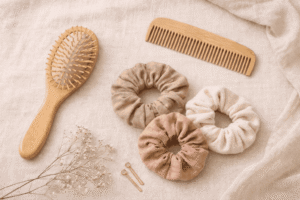
Bamboo Brushes and Wooden Combs
Plastic brushes are rarely recycled. Bamboo and wood alternatives are biodegradable and often last longer.
A common comment from forum users:
“I didn’t expect much, but my wooden comb actually reduced frizz. I barely use leave-in products now.”
This happens because wood does not create static electricity the way plastic does. It also distributes natural oils more evenly, reducing the need for styling products.
Fabric Hair Ties and Metal Clips
Many people underestimate how much waste comes from hair ties. Traditional elastic bands break quickly and are thrown away.
Eco-conscious users often switch to:
- Organic cotton scrunchies
- Recycled fabric ties
- Durable metal or wooden clips
One user mentioned:
“I bought a pack of recycled fabric scrunchies two years ago. I still use the same ones. Before that, I was buying new hair ties every month.”
Natural Styling Products: What People Actually Use
Switching products is often the most noticeable change in eco-friendly hair styling methods.
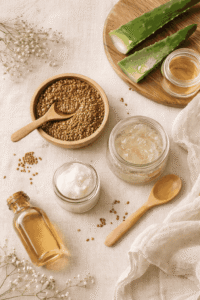
DIY Flaxseed Gel
Flaxseed gel has become extremely popular in natural hair communities.
Typical feedback:
“It takes 10 minutes to make, costs almost nothing, and works better than most gels I tried.”
It provides hold without stiffness and washes out easily.
Aloe Vera Styling Gel
Aloe vera is another widely used alternative.
- Lightweight hold
- Adds moisture
- Suitable for curly and wavy hair
Powder-Based Dry Shampoo
Instead of aerosol sprays, many users now use:
- Cornstarch
- Arrowroot powder
- Cocoa powder (for darker hair)
One forum user shared:
“I switched to arrowroot powder and realized I was washing my hair less. My scalp feels healthier.”
This aligns with findings from dermatology research suggesting that over-washing can disrupt scalp balance and increase oil production.
Heat-Free Styling: The Most Effective Shift 
Among all eco-friendly hair styling methods, reducing heat is often the most impactful.
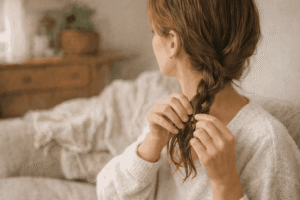
Overnight Braids and Twists
A very common technique:
- Braid damp hair before sleep
- Undo in the morning for natural waves
User experience:
“I stopped using my curling iron completely. Braids give me better texture and it lasts longer.”
Sock Curls and Fabric Rollers
This method has gained popularity on platforms like TikTok and forums.
- No heat required
- Minimal damage
- Reusable materials
Air Drying Techniques
Instead of blow drying:
- Use a cotton T-shirt instead of a towel
- Scrunch hair gently
- Let it dry naturally
A user noted:
“Once I stopped blow drying daily, my hair became noticeably thicker after a few months.”
Scientific studies support this. Research published in Annals of Dermatology shows that excessive heat exposure can damage the hair shaft and weaken proteins over time.
Everyday Habits That Support Eco-Friendly Styling
Eco-friendly hair styling methods are not just about products—they are about habits.
Washing Less Frequently
Many forum users report transitioning from daily washing to every 2–3 days.
Initial struggle is common:
“The first two weeks were hard, but then my scalp adjusted. Now my hair doesn’t get greasy as fast.”
This aligns with dermatological advice that frequent washing can overstimulate oil production.
Choosing Better Packaging
Users increasingly look for:
- Refillable containers
- Glass bottles
- Solid bars
One shared experience:
“I switched to solid shampoo and styling bars mainly for travel, but now I use them at home too. No plastic clutter anymore.”
Supporting Ethical Brands
Consumers are also becoming more selective.
Many rely on resources like Ethical Consumer to evaluate brands based on:
- Ingredient sourcing
- Packaging practices
- Environmental policies
What People Struggle With (And How They Adapt)
Eco-friendly routines are not always perfect from the start.
Common challenges from forums include:
1. Transition Period
Hair may feel different initially.
“My hair felt heavier when I stopped silicones, but after a month it looked healthier.”
2. Finding the Right DIY Balance
Some people experiment:
- Too much oil → greasy look
- Too little hold → flat hair
Over time, most find a balance that works.
The Bigger Picture: Why These Methods Matter
Eco-friendly hair styling methods are not just about personal care—they connect to larger environmental issues.
According to reports from the Environmental Protection Agency:
- Billions of plastic containers end up in landfills each year
- Personal care products contribute to water pollution
By reducing reliance on:
- Aerosol sprays
- Single-use plastics
- Chemical-heavy formulas
Individuals can make a measurable difference over time.
The Future of Eco-Friendly Hair Styling Methods
The beauty industry is adapting quickly.
We are already seeing:
- Waterless products
- Biodegradable packaging
- Multi-use styling bars
At the same time, grassroots knowledge from communities continues to shape trends faster than brands can.
Many innovations—like flaxseed gel or sock curls—became popular because people shared real results, not because companies promoted them.
Final Thoughts
Eco-friendly hair styling methods are not about perfection. They are about small, consistent changes.
What stands out from real-life experiences is that:
- Simpler routines often work better
- Less product can mean healthier hair
- Sustainable choices can also save money
Most importantly, these methods are flexible. You do not need to change everything at once.
Even switching one habit—like reducing heat styling or replacing a single product—can make a difference.
And as many people have discovered through trial and error, eco-friendly hair styling methods are not just better for the planet—they often lead to stronger, more natural-looking hair.
How to Wash Your Hair Without Plastic? Alternatives to Liquid Shampoos
Minimalism and Sustainability: How Reducing Excess Enhances Life Quality

I’m Victoria, the creator behind Eva My Balance. Passionate about beauty, wellness, sustainable living, and mindful self-care. My mission is to inspire you to live consciously and beautifully—inside and out.